

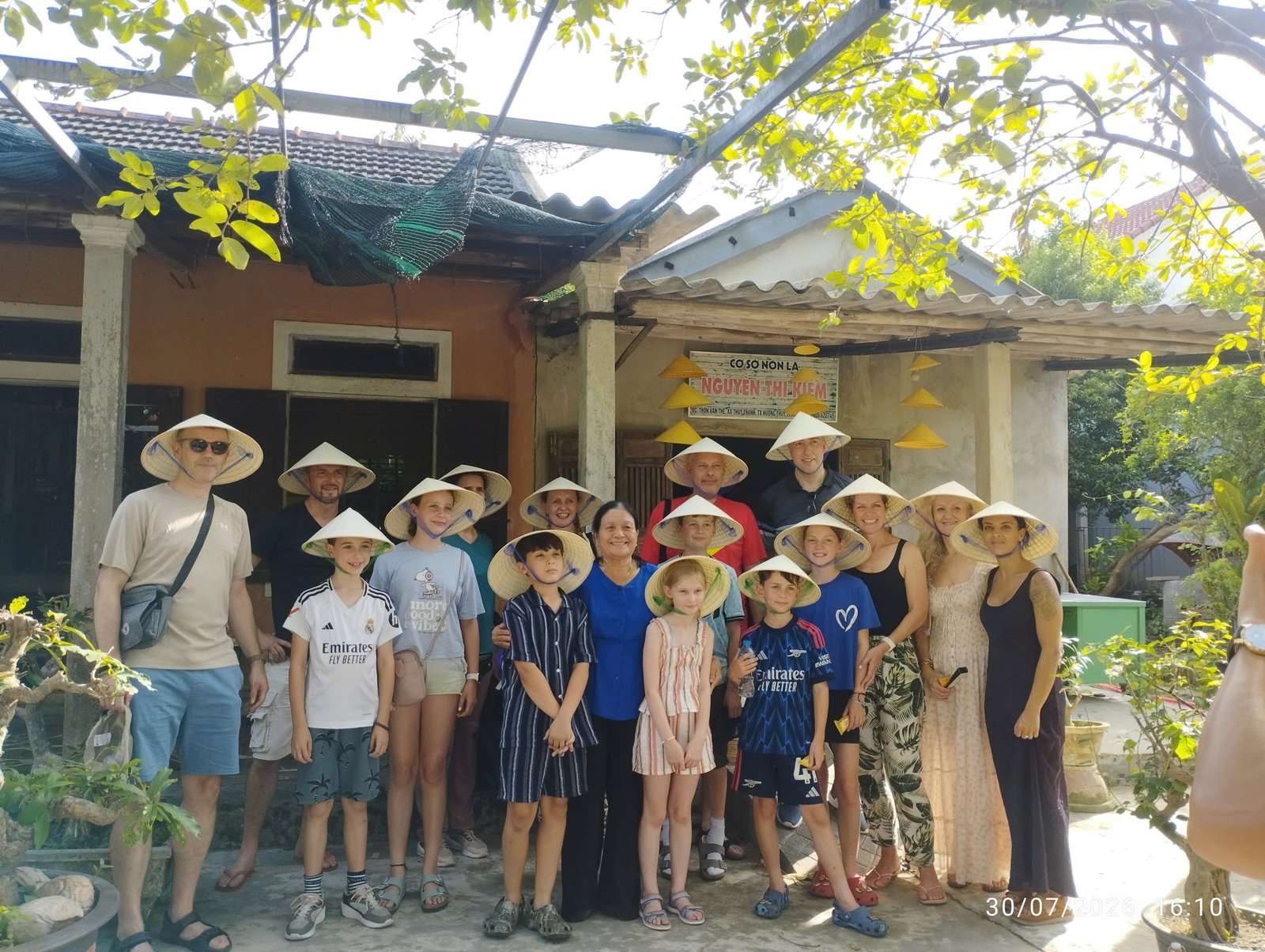
 Blog
When thinking of Vietnam, one of the first images that often comes to mind is a traditional conical hat, known locally as Non La. With its graceful shape, natural materials and timeless design, this simple yet beautiful hat has become one of the most recognizable symbols of Vietnamese culture.
More than just an accessory to protect people from the sun and rain, Non La tells a story of Vietnamese history, craftsmanship and everyday life.
1. The History Behind Non La
The conical hat has been part of Vietnamese life for generations. Its origins are deeply connected to the country’s agricultural traditions, particularly the daily activities of farmers working in rice fields under the tropical sun.
Although its exact origins are difficult to determine, conical hats have appeared in Vietnamese cultural imagery for centuries. Over time, they became an essential part of rural life and gradually developed into a familiar symbol of Vietnam.
Today, Non La remains closely associated with the country’s traditional identity, especially the image of Vietnamese women wearing graceful conical hats while walking through village paths or working in the countryside.

(Source: Lao Dong Newspaper)
2. How Is a Vietnamese Conical Hat Made?
Despite its simple appearance, making a traditional Non La requires patience, skill and careful craftsmanship.
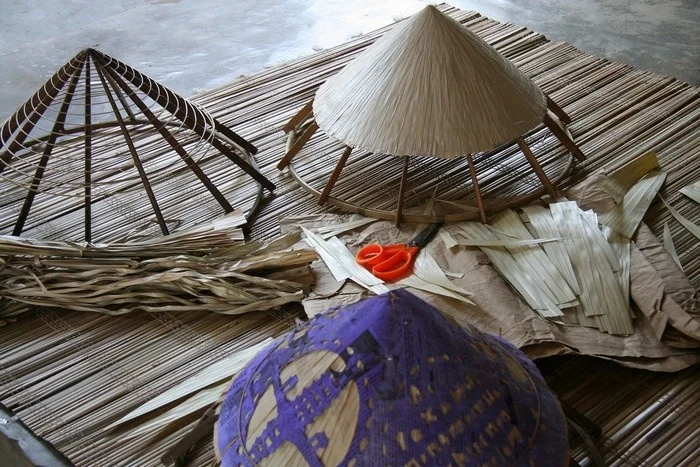
The hat is commonly made from natural materials such as palm leaves, bamboo and thin bamboo strips. Each part is prepared and assembled by hand.
The process generally involves several steps:
- Preparing the leaves: Palm leaves are selected, dried and carefully treated to achieve a smooth, light surface.
- Making the frame: Thin bamboo strips are shaped into circular rings to create the hat’s distinctive conical structure.
- Arranging the leaves: The leaves are carefully placed over the bamboo frame in overlapping layers.
- Sewing the hat: Artisans use fine threads to stitch the leaves securely together.
- Finishing touches: The hat is trimmed, shaped and sometimes decorated with ribbons or additional details.
Every handmade Non La reflects the patience and experience of its maker, making each piece a small expression of Vietnamese traditional craftsmanship.
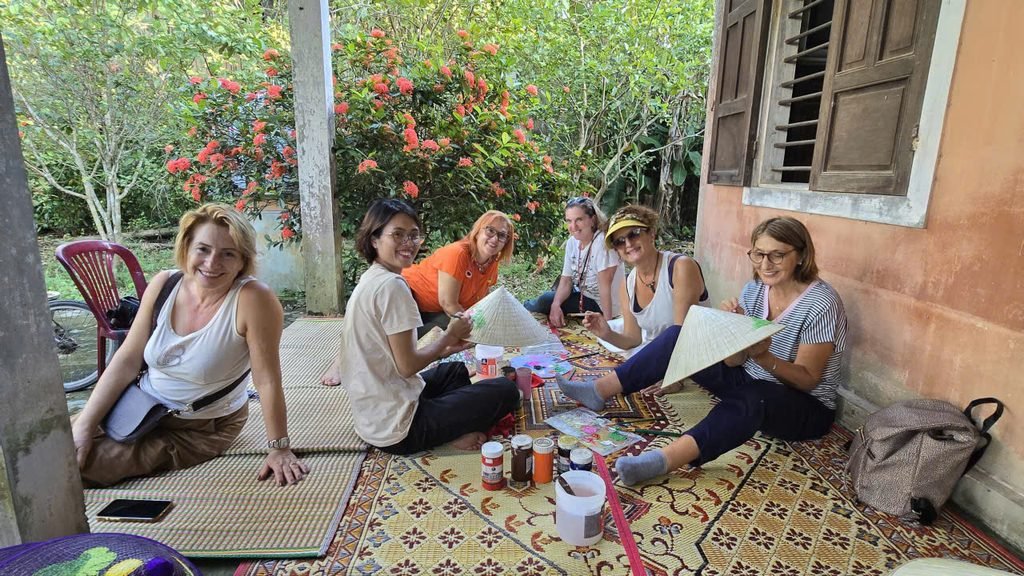
3. Non La in Vietnamese Daily Life
For generations, Non La has served practical purposes in everyday Vietnamese life. Farmers wear it to protect themselves from the strong sunlight while working in the fields, while street vendors use it during long hours outdoors.
In rural areas, the conical hat is often seen alongside traditional clothing, bicycles, baskets of fresh produce and peaceful village scenery.
Beyond its practical function, Non La has also become a symbol of Vietnamese femininity, simplicity and elegance. It is particularly associated with the traditional image of women wearing the graceful Ao Dai.
The combination of Ao Dai and Non La has become an iconic representation of Vietnamese beauty and cultural identity.
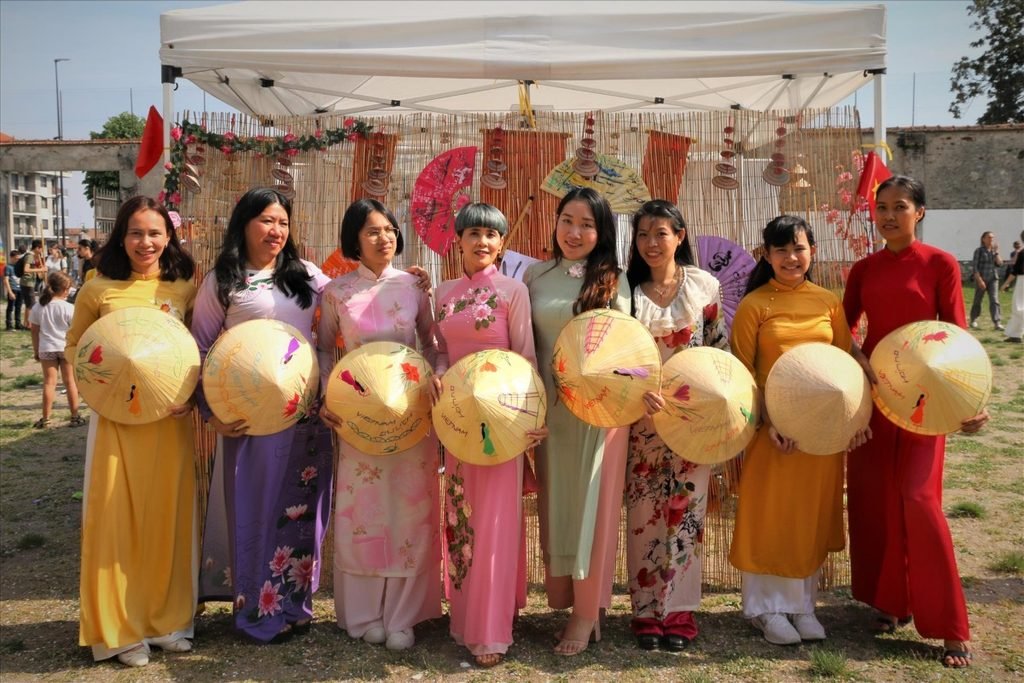
(Source: vietnam.vnanet.vn)
4. Famous Traditional Non La Craft Villages
Vietnam is home to several traditional craft villages where visitors can learn about the art of making conical hats and meet local artisans.
Chuong Village – Hanoi
Located in Thanh Oai District, Hanoi, Chuong Village is one of Vietnam’s best-known traditional conical hat-making villages. With a long history of craftsmanship, the village is famous for its handmade hats and traditional production techniques.
Visitors can observe artisans carefully sewing palm leaves, explore local workshops and discover how this traditional craft has been passed down through generations.

Tay Ho Village – Hue
Tay Ho Village in Hue is particularly famous for its poetic Non Bai Tho, or conical poetry hats. These distinctive hats feature hidden poems or decorative images between layers of leaves, which become visible when held up to the light.
This delicate craftsmanship makes the Hue conical hat a unique cultural souvenir and a beautiful representation of the city’s artistic heritage.
(Source: Hue GOV)
5. Non La: A Meaningful Souvenir from Vietnam
For international visitors, a Vietnamese conical hat is more than a traditional souvenir. It represents the country’s cultural heritage, craftsmanship and connection to nature.
Whether displayed as a decorative item, given as a meaningful gift or worn as a traditional accessory, Non La offers travelers a special way to remember their journey through Vietnam.
Its timeless design reminds us that some of the most beautiful cultural treasures are found in the simplest objects of everyday life.
Experience the Beauty of Vietnamese Culture with Sinh Tourist
Traveling through Vietnam is not only about discovering beautiful landscapes and famous attractions. It is also about experiencing local traditions, meeting skilled artisans and understanding the stories behind everyday objects.
From the bustling streets of Hanoi to the peaceful villages of Hue, let Sinh Tourist take you closer to the authentic culture and timeless charm of Vietnam.
Discover Vietnam beyond the ordinary with Sinh Tourist!
