

 Blog
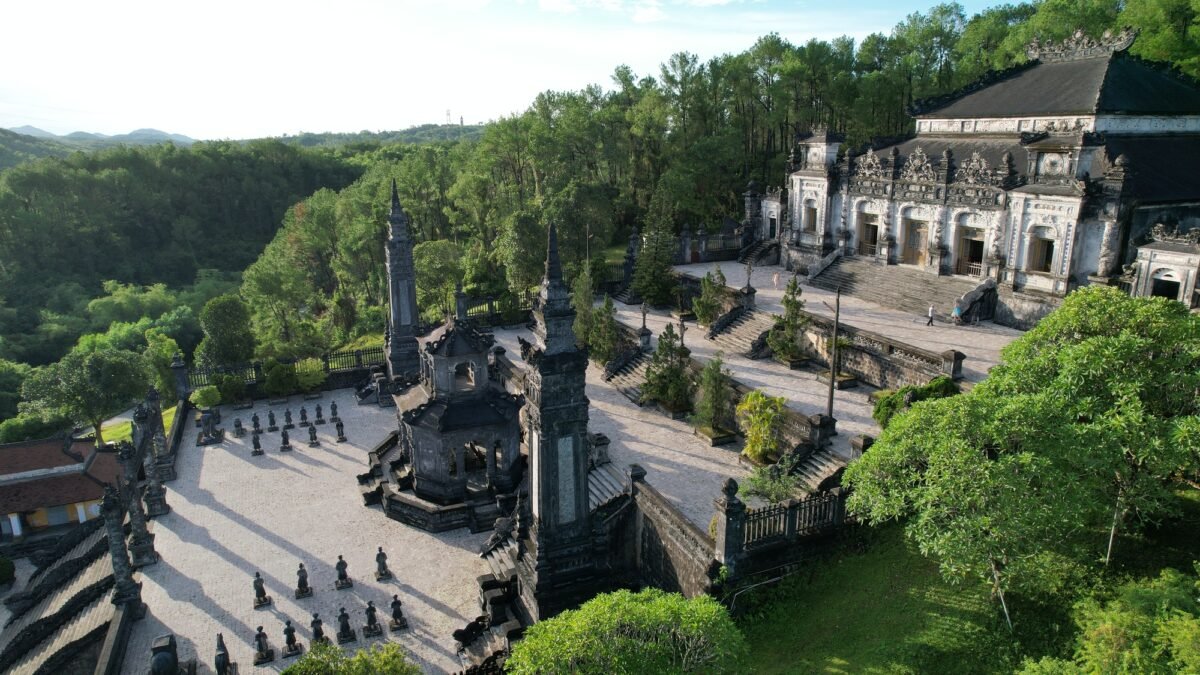
BlogPerched on the hillside of Chau Chu Mountain, roughly ten kilometers from Hue’s city center, Khai Dinh Tomb stands as one of the most visually arresting monuments of Vietnam’s imperial era. Among the royal mausoleums of the Nguyen Dynasty, it is widely recognized as the most unconventional. Rather than blending gently into its surroundings, the tomb asserts itself through bold lines, dark surfaces, and a commanding sense of presence.
What makes this site particularly compelling is the story embedded in its stone and structure. The tomb was conceived during a period of political uncertainty and cultural transition, and its design reflects this complexity. It does not seek quiet harmony, but instead expresses ambition, authority, and artistic experimentation. From the outset, visitors sense that this is not simply a burial site, but a carefully constructed statement of legacy.
Historical Background: A Monument Shaped by Colonial-Era Vietnam
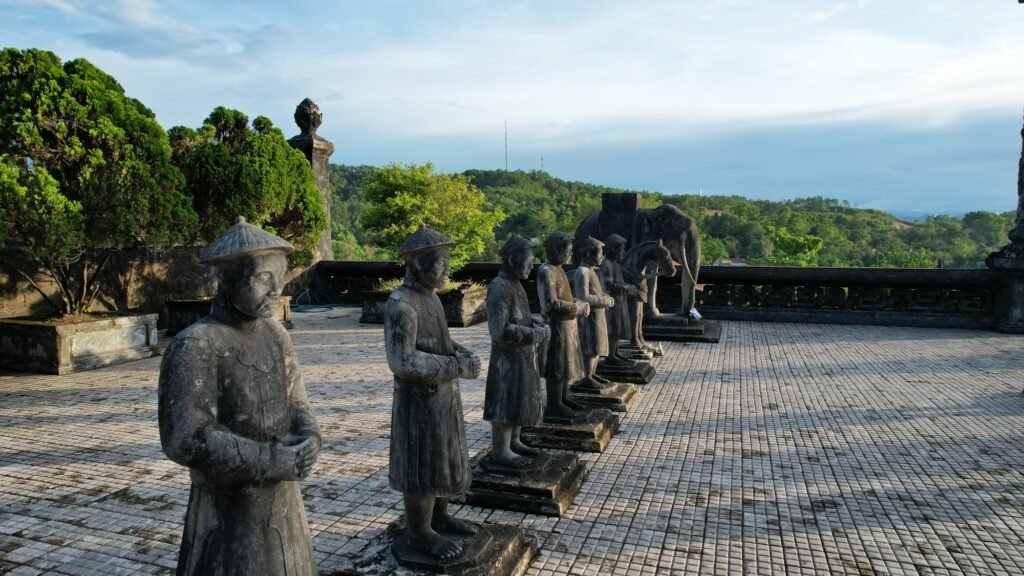
The construction of Khai Dinh Tomb began in 1920 and extended over eleven years, reaching completion in 1931. Commissioned by Emperor Khai Dinh, the twelfth ruler of the Nguyen Dynasty, the project unfolded at a time when Vietnam was under French colonial administration. By then, imperial power had become largely symbolic, constrained by external influence and internal change.
This historical reality deeply shaped the tomb’s appearance. Unlike earlier imperial monuments rooted entirely in traditional aesthetics, Khai Dinh Tomb incorporates Western architectural concepts alongside long-established royal symbolism. The result is a structure that reflects both adaptation and resistance — a visual expression of a dynasty attempting to redefine itself in a rapidly changing world.
Setting and Spatial Experience
Rather than resting quietly within the landscape, Khai Dinh Tomb rises dramatically from the mountainside. Its elevated location reinforces a sense of dominance and formality, emphasizing power over tranquility. The ascent toward the main structure is intentional and ceremonial, guiding visitors upward through a sequence of terraces and stairways.
This gradual climb alters perception. As the surrounding greenery recedes, the monument becomes increasingly imposing, encouraging reflection on hierarchy, authority, and permanence. The physical effort required to reach the top mirrors the symbolic distance between the imperial world and everyday life.
Architectural Language: A Fusion of Cultural Influences
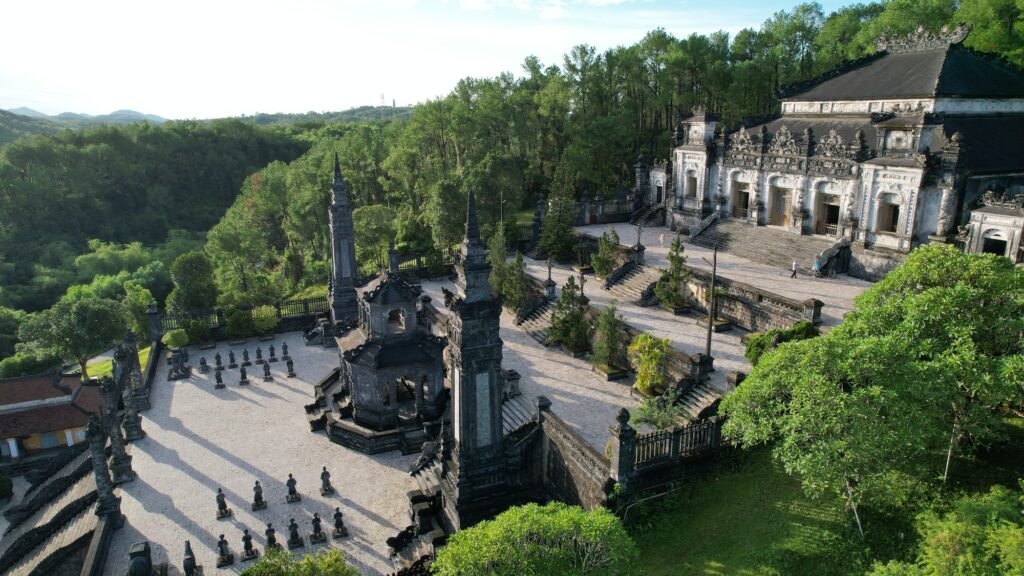
Khai Dinh Tomb represents a deliberate blending of Vietnamese and Chinese symbolism with architectural elements drawn from European traditions, particularly Gothic and Baroque styles. The façade’s symmetry, decorative reliefs, and columned forms echo Western monumental design, while traditional motifs such as dragons, lotus flowers, and imperial emblems remain central to its identity.
Equally significant is the use of reinforced concrete, a material rarely employed in royal architecture at the time. This choice not only contributed to the tomb’s dark, monumental character but also signaled a shift toward modern construction techniques. The material’s durability reinforces the emperor’s desire for permanence in an era marked by uncertainty.
Thien Dinh Palace: The Artistic Core of the Tomb
At the highest point of the complex lies Thien Dinh Palace, the spiritual and artistic centerpiece of the tomb. After the austere exterior, the interior comes as a dramatic surprise. Color, texture, and intricate detail dominate the space, creating a striking contrast that leaves a lasting impression.
The walls and ceilings are adorned with elaborate mosaics crafted from fragments of porcelain, ceramics, and colored glass. These fragments are meticulously arranged into images of mythical creatures, celestial motifs, and symbolic patterns. At the center stands a bronze statue of Emperor Khai Dinh, positioned beneath an elaborately decorated ceiling widely regarded as a masterpiece of imperial art.
Meaning and Symbolism
Every architectural and decorative element within Khai Dinh Tomb serves a symbolic purpose. Dragons represent imperial authority, while cloud motifs suggest the connection between the earthly and the divine. The elevated placement of the tomb reinforces traditional beliefs surrounding the emperor’s semi-sacred status.
Beyond individual symbols, the tomb as a whole reflects a broader cultural narrative. It captures a moment when Confucian ideals, imperial identity, and Western influence coexisted within Vietnamese society. In this way, the monument functions as both a mausoleum and a historical record, preserving the complexities of its era in architectural form.
Comparison with Other Nguyen Royal Tombs
When viewed alongside the more tranquil settings of Tu Duc or Minh Mang tombs, Khai Dinh Tomb feels distinctly formal and theatrical. Although smaller in scale, it is far more elaborate in terms of decorative detail. Its emphasis on structure and ornamentation makes it particularly appealing to those interested in art, architectural history, and cultural transformation.
Rather than encouraging quiet contemplation, the tomb provokes curiosity and reflection. It challenges visitors to consider how power, identity, and history can be expressed through design.
Visiting Considerations
The best time to explore Khai Dinh Tomb is early in the morning or late in the afternoon, when lighting enhances the monument’s textures and crowds are thinner. The climb involves numerous steps, so comfortable footwear is recommended. Allowing around one hour ensures sufficient time to absorb both the exterior and interior details.
Visiting Khai Dinh Tomb in conjunction with other royal tombs offers valuable insight into the diversity of imperial architecture and the evolving philosophies behind it.
Why Khai Dinh Tomb Matters
More than a landmark, Khai Dinh Tomb stands as a powerful symbol of Vietnam’s cultural and historical transition. Its unconventional design, artistic richness, and layered meaning make it one of Hue’s most compelling sites, offering visitors a deeper understanding of the nation’s past.
Conclusion
Khai Dinh Tomb is not merely a place to see, but a place to interpret. Positioned at the intersection of tradition and modernity, East and West, it continues to resonate with visitors seeking insight into Vietnam’s imperial history and cultural identity.


