

 Blog
BlogJust a short ride from the lantern-lit streets of Hoi An lies Cam Thanh Coconut Village, a serene enclave of green palms, calm waterways, and living traditions. Known locally as the Bay Mau Coconut Forest, this verdant mangrove offers much more than scenic boat rides — it’s a place where nature, culture, and community coexist in perfect harmony, giving visitors a rare glimpse into the daily life along Vietnam’s waterways.
A Living Mangrove
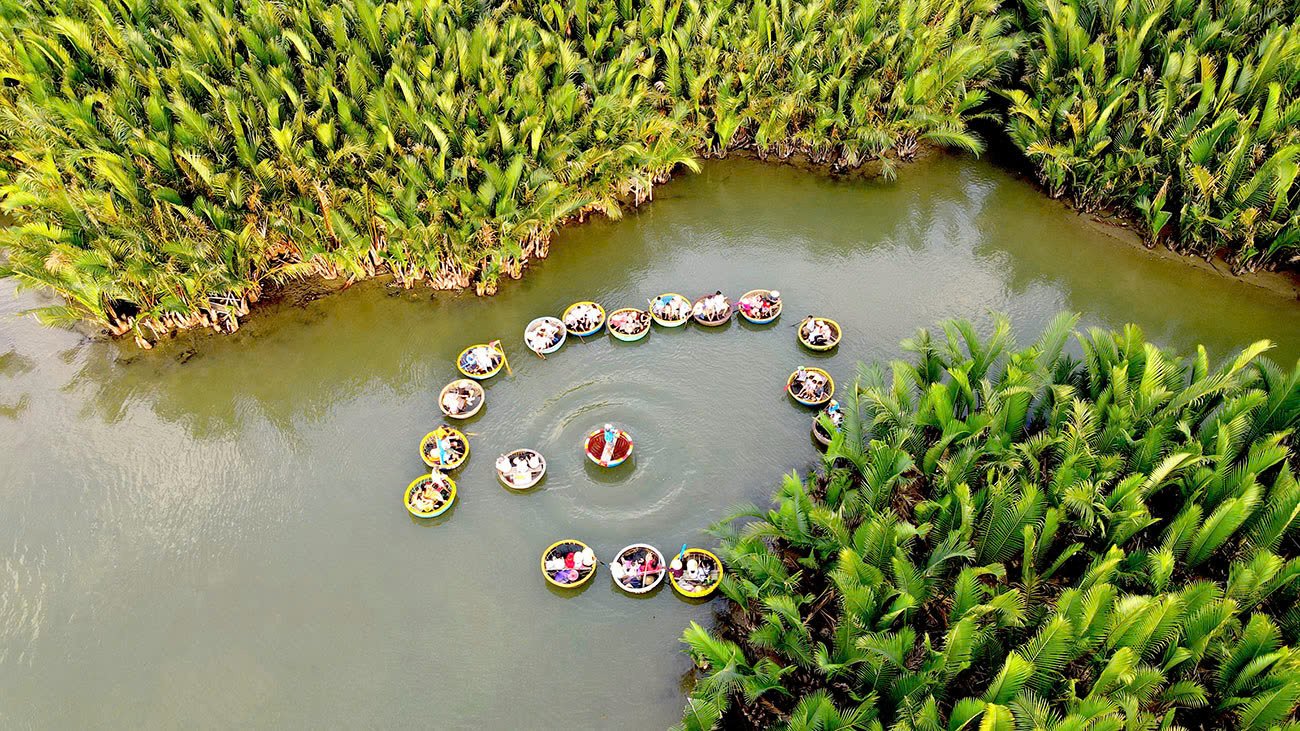
The heart of Cam Thanh is its coconut palm forest, a sprawling mangrove covering over 100 hectares, crisscrossed with narrow canals. These palms, originally brought from southern Vietnam centuries ago, have thrived in the brackish waters of central Quang Nam Province, becoming an integral part of the local environment and lifestyle.
Beyond its beauty, the forest plays a crucial role in protecting the village from floods and storms, while supporting a rich ecosystem of fish, crabs, and birds. Floating through the channels in a traditional basket boat (thúng chai) is like drifting through a living ecosystem, where every turn reveals the interconnectedness of nature and village life.

The Charm of Basket Boats
One of the most unique experiences in Cam Thanh is riding a round bamboo basket boat, an invention of local fishermen that cleverly evaded colonial taxation centuries ago. Today, these boats have become iconic, offering both adventure and a glimpse into Vietnamese ingenuity.
Skilled villagers, often women in their 50s or 60s, expertly paddle and navigate the boats, sharing stories, performing playful spins, or even singing folk songs. The experience is not just about sightseeing — it’s about connecting with the people and their way of life.
Hands-On Village Experiences
Cam Thanh invites visitors to participate in everyday activities that reveal the village’s traditions:
- Fishing with locals: Cast a bamboo net, catch crabs, or try hand-fishing under the guidance of experienced fishermen.
- Coconut leaf crafting: Learn to weave coconut fronds into decorative items or practical tools, a skill passed down through generations.
- Cooking classes: Prepare local specialties like bánh xèo, fresh spring rolls, or grilled seafood using fresh ingredients from the village garden.
These immersive experiences provide a genuine insight into how the villagers live in harmony with water, land, and community.

Staying Amid the Palms
For those wishing to extend their stay, Cam Thanh offers eco-lodges and family-run homestays. Here, wooden bungalows nestled among coconut trees provide peaceful retreats, complemented by homemade breakfasts with garden-fresh ingredients. Many accommodations prioritize sustainability, supporting conservation of the mangrove forest and cultural education for guests. Staying here is not just restful — it’s meaningful.
A Village with History
Cam Thanh also carries a historical significance. During the Vietnam War, the dense coconut forests provided cover for Viet Cong fighters, offering a natural hideout. Remnants of this past linger in stories, memorials, and the village’s resilient spirit, adding depth to any visit.
Tips for Visiting Cam Thanh
- Best time: February to August for dry weather and calm waters. Early mornings or late afternoons offer softer light and cooler temperatures.
- What to bring: Sunscreen, hat, insect repellent, camera, reusable water bottle, and sandals suitable for wet conditions.
- How to get there: 5–7 km from Hoi An Old Town, reachable by bicycle, motorbike, taxi, or eco-tour transfers.
- Tour suggestions: Choose small-group, community-based tours to help preserve the village’s charm.
A Model of Sustainable Tourism
Cam Thanh demonstrates sustainable tourism at its best, involving locals in economic and cultural activities while protecting the mangrove ecosystem. Visitors can support these efforts by staying at local homestays, avoiding single-use plastics, respecting customs, and engaging with the community.
Why Cam Thanh is Unforgettable
Cam Thanh Coconut Village isn’t about grandeur; it’s about tranquility, tradition, and connection. Here, rivers whisper, forests breathe, and every interaction feels personal. Leaving Cam Thanh, visitors take with them not just memories but a sense of connection — and perhaps a small handcrafted coconut-leaf keepsake.


